
China to Africa shipping: frequently asked questions
Popular questions
How long does sea freight from China to Nigeria take?
From when we receive your goods to delivery to your door in Lagos, sea freight usually takes 45 to 60 days and air freight 7 to 12 days. This includes export customs, international shipping, import clearance and local delivery. Shared containers wait for other goods to be gathered and unpacked, so they are usually at the longer end. Peak season, rolled containers and port congestion can add time; the sailing schedule confirmed at booking applies.
What does door-to-door with customs and duties included cover?
It is one all-in price with no other fees. It covers pickup in China, export customs, sea or air freight, import clearance and port inspection charges, import duty and VAT, cargo insurance and local delivery at the destination. Only three things are charged separately: extra duty and fines because the declared details don't match the goods, port and storage charges caused by the receiver, and SONCAP or NAFDAC certificates if you ask us to get them.
Do I need a SONCAP certificate?
The Standards Organisation of Nigeria (SON) requires products on its mandatory list to have a SONCAP certificate before export, and it must be presented at import clearance. Products not on the list don't need one. Whether a product is on the list depends on its customs code (HS code) and use, so each product has to be checked. We check this for you before booking and explain the result.
Can you ship products with batteries, cosmetics or food to Nigeria?
Yes, as long as they meet the rules. Products with batteries need a UN38.3 test report and an MSDS safety data sheet and are booked under dangerous or special cargo rules. Cosmetics and food need NAFDAC registration in Nigeria; unregistered products cannot be legally cleared. Liquids, powders and chemicals are also shipped when they meet the rules. We only accept goods with complete documents that can be legally cleared.
What happens if goods are lost, damaged or delayed?
Responsibility, compensation standards and time limits are written into the service agreement. If it is our handling error, we pay compensation as agreed. If the carrier is responsible, we claim under the transport contract and bill of lading and follow it up for you. The all-in price includes cargo insurance on the declared value, and we help you claim under the policy terms. Full terms are on the service guarantee page.
What currency can I pay in on the African side?
Charges outside China can be paid in local currency, US dollars or Chinese yuan. We don't publish fixed rates on the website: freight, duty and certificates depend on each product's customs code (HS code), the volume and the destination city. We quote a door-to-door price for each shipment, and the price we quote is the price you pay.
Can I collect the goods myself in Africa?
Yes. After the goods are cleared and released in Africa, you can collect them yourself or have them delivered to your door. Just tell us which you prefer when you ask for a quote.
How do I start if it's my first shipment?
Send us the product names, quantity, weight and volume, where the goods are in China and the destination city. We check whether mandatory certificates or special cargo rules apply, then give you a door-to-door price and estimated delivery time. Once you confirm, we sign the service agreement and arrange warehouse delivery or pickup. One person looks after your shipment throughout, so you never have to contact shipping lines or customs agents yourself.
Company and team
What kind of company is Best Africa Logistics?
Best Africa Logistics (Shenzhen) Co., Ltd. is an international freight forwarder that specialises in China to Africa. We offer sea and air freight door to door with duties included, breakbulk and full-container clearance to door, battery containers, SONCAP / NAFDAC certification, and consolidation warehouses in China. Our main market is Nigeria: we have a consolidation warehouse in Bao'an, Shenzhen, and our own office, warehouse and clearance team in Ikeja, Lagos.
How long have you been shipping between China and Africa, and how many customers have you served?
We have more than 10 years of China-Africa freight experience and have served more than 2,000 customers in total.
Do you outsource Nigerian customs clearance to a local agent?
No. Our own team handles clearance in Nigeria, with a warehouse and a Chinese-speaking service team in Ikeja, Lagos. The team follows up Form M, SONCAP, PAAR, CRI and other documents directly, so when something comes up you talk to the people doing the work instead of being passed between layers of agents.
Is the Shenzhen team your own staff?
Yes. The Shenzhen team are company employees who receive goods into the warehouse, check and palletise them, and load containers. The Lagos team follows up port clearance and local delivery. Both ends are our own people, with no subcontracting down the chain.
Where are your offices and warehouses?
Shenzhen: 1F, Building 12, No. 8 Tangwei Industrial Avenue, Fuhai Subdistrict, Bao'an District, Shenzhen, Guangdong. Lagos: No 2 Henry Carr Street, By Guinness Bus Stop, Ikeja, Lagos State 102212, Nigeria. Maps of both are on the Contact page.
Do payments go to a company account?
Yes. We receive payment into the company's corporate account, never a personal account.
Routes and coverage
Which African countries can you ship to?
Our current routes are Nigeria, Ghana, Togo, Côte d'Ivoire, Senegal, Kenya, Tanzania, Ethiopia, South Africa, Morocco, Algeria, Tunisia and Egypt. Nigeria is our main market, with door-to-door service, customs clearance and duties included. For other countries, the main ports, transit times and compliance rules are on each route page; when you ask for a quote we confirm the exact plan by product and destination city.
Which Nigerian ports can you clear at?
We can clear in Lagos, Kano and Port Harcourt. Lagos covers the Apapa and Tin Can container ports and MMIA airport. If the receiver is near Kano or Port Harcourt, the goods can be cleared nearby instead of trucked a long way from Lagos. The port is confirmed before booking.
Which is faster, Apapa or Tin Can?
Both are Lagos's main container ports. Speed depends on current congestion, the shipping line's port calls and inspections, so neither is always faster. We choose based on conditions at booking, and when one side is badly congested we can switch to the other.
What are the transit times for other countries?
Reference sea / air transit times: Ghana 28 - 35 days / 6 - 9 days, Togo 30 - 38 days / 6 - 9 days, Côte d'Ivoire 30 - 38 days / 6 - 9 days, Senegal 30 - 40 days / 6 - 9 days, Kenya 28 - 35 days / 6 - 9 days, Tanzania 30 - 38 days / 7 - 10 days, Ethiopia 22 - 30 days / 5 - 8 days, South Africa 22 - 30 days / 6 - 9 days, Morocco 25 - 38 days / 5 - 8 days, Algeria 28 - 38 days / 5 - 8 days, Tunisia 28 - 38 days / 5 - 8 days, Egypt 20 - 30 days / 5 - 8 days. These are times in transit, without clearance or delivery; for Nigeria we give door-to-door time from receiving the goods to delivery. The full comparison is in the delivery time table.
Can you deliver to inland cities or remote areas?
Main cities are all covered. Remote areas need a separate check on access and extra charges, and rainy-season roads can slow inland transport. Send the exact delivery address with your inquiry and we will tell you clearly whether we can deliver and roughly how long it takes.
Services and shipping modes
What are your popular services?
Five: sea freight door to door with duties included, air freight door to door with duties included, breakbulk clearance to door, APAPA full-container clearance to door, and battery containers with customs cleared and duties included. We also handle SONCAP / NAFDAC certification and run five consolidation warehouses in Qingdao, Lianyungang, Shenzhen, Guangzhou and Yiwu.
What does "door to door with duties included" mean?
Clearance at both ends means we handle both export customs in China and import clearance in the destination country. Duties included means import duty and VAT are in the quote. Door-to-door means the goods are delivered straight to the receiver's address. The whole chain has one price, so you don't need to find a shipping line, a clearing agent and a delivery truck yourself. On the Morocco route, import duties and VAT are not included.
Full container or shared container: which costs less?
From one 20 ft container (about 28 cubic metres) upwards, a full container is usually better: lower unit cost, no waiting for consolidation, no unpacking at the destination port, and steadier timing. Below half a container, a shared container costs less, but you wait longer for consolidation and unpacking. If your volume is in between, we can quote both for you to compare.
How much slower is a shared container than a full one?
A shared container waits until the other goods in it are gathered before loading, then is unpacked and sorted after arrival, so it usually takes 5 to 10 days longer than a full container. If timing matters and you are close to half a container, go straight to a full container.
When does air freight make sense?
When goods are high value and low volume (usually under 500 kg), or the restock window is tight, the total cost of air freight is often lower than the loss from running out of stock while waiting for sea freight. Air freight can also be door to door with duties included, quoted the same way as sea freight.
What goes by breakbulk ship?
Construction machinery and large equipment that are too tall, wide or heavy for a normal container, and bulk heavy cargo such as steel and rebar shipped in batches. We design the securing plan from the cargo's dimensions, weight and centre of gravity, then clear it at the port and deliver it to the door. Vehicles that can drive on board can go by RoRo ship instead.
What does APAPA full-container clearance to door include?
After a full container arrives at Apapa port in Lagos, our own Lagos team handles Form M, PAAR and other documents and import clearance, then delivers to the door after release. From receiving the goods in China to the customer signing for them usually takes 45 - 60 days, of which the sea leg is about 30 - 38 days. When Apapa is badly congested we can switch to Tin Can port.
What is the minimum shipment?
Shared sea containers start from 1 cubic metre and air freight from 21 kg. The exact threshold depends on the destination and type of goods, and small test orders can also be arranged. Just ask for a quote.
Can you pick up from the factory?
Yes. The all-in door-to-door price already includes pickup in China. Your supplier can also deliver to whichever of our five warehouses is nearest.
Costs and quotes
How soon can I get a quote?
Quote within 30 minutes. Send the product name, quantity, weight and volume, origin and destination city all at once for the fastest and most accurate quote.
Why don't you publish prices on the website?
Freight, duty and certificates all depend on the HS code of the product, the volume and the destination city. General goods and battery products of the same volume can have very different door-to-door totals. A single published price would only mislead you, so we quote a door-to-door total for each shipment, and the quote is the final price.
Why do you need the product name before quoting?
The product name decides the HS code, and the HS code decides the duty rate and whether mandatory certification is needed. Any number given without a product name is only a reference and can't be used as a quote.
How are heavy and bulky goods charged?
Shared containers are charged on volume or weight, whichever is greater; 1 cubic metre usually corresponds to a 1,000 kg charging basis, and above that it is charged by weight. Full containers are charged per container type, but watch the road weight limits in the destination country: overweight containers lead to extra splitting costs or fines.
Once a duties-included quote is confirmed, can the duty still change?
It is estimated from the product name, HS code and goods value you provide and then locked, so normally it won't change. If the product, quantity or value actually shipped differs from the quote, or the destination country officially changes its duty rate or exchange rate, it has to be recalculated on the actual figures. We will show you the basis and only proceed after you confirm.
How long is a quote valid?
International sea freight rates move with shipping-line price changes and peak seasons, so the quote states its validity period and adjustment conditions. After it expires, the current rate needs to be reconfirmed.
How much more does air freight cost than sea freight?
Air freight usually costs several times more per unit than sea freight, but the multiple varies a lot with space availability, fuel surcharges and cargo density, so there is no fixed ratio. We quote both sea and air options from the actual weight and volume so you can compare.
Do you need a deposit? Can I pay monthly?
Payment milestones are set in the service agreement, usually tied to warehouse receipt, sailing and port clearance. A first shipment is usually paid per shipment; long-term customers with steady volume can discuss credit terms once the cooperation is stable. We will never raise new charges after your goods are already held at the destination port.
Offers
What offers are available now?
Four: $150 off a new customer's first order (on freight of $3,000 or more); $200 off a single full-container shipment of 3 containers or more; destination THC waived on a single full-container shipment of 2 containers or more; 3 cubic metres of freight off a shared-container shipment of 45 cubic metres or more.
Are the two full-container offers either-or?
No, they are two tiers: destination THC waived from 2 containers in a single shipment, and $200 off from 3 containers in a single shipment.
How do I claim an offer?
Tell us which offer you want when you ask for a quote and we will apply it directly in the quote. Call or message us on WhatsApp at +234 903 365 5298.
Receiving and warehouses in China
Which warehouses in China can receive goods?
Five warehouses receive goods at the same time: Qingdao, Lianyungang, Shenzhen, Guangzhou and Yiwu. Suppliers deliver to the nearest one, so there is no need to move the goods to a single city first. If goods from several suppliers need to go in the same container, send them to the same warehouse.
What should suppliers watch when delivering to the warehouse?
We assign the warehouse nearest each supplier and give the warehouse address, receiving contact and shipping mark format. Suppliers should ship with the shipping mark so the goods can be matched correctly to your shipment on arrival.
What do you do once goods arrive at the warehouse?
We count the pieces, check shipping marks and carton specs, inspect the outer packaging and send photos back, weigh and measure to give actual weight and volume, secure and palletise as needed, and load the container or arrange air freight once consolidation is complete. You can see the condition of the goods without being there, and you have evidence if a dispute comes up later.
How long is free storage, and what does overtime cost?
Free storage depends on the type of cooperation and volume, and the quote states the start date and number of days. Storage beyond that is charged per pallet or cubic metre per day, at a rate also set out in the quote. We remind you before the free period ends.
Can you inspect my goods?
At warehouse receipt we do logistics checks: piece count, carton specs, outer packaging condition and photos for the record. Opening cartons for quality checks, function tests and formal inspection reports are professional services of third-party inspection companies. We can introduce one and arrange time and space, but as a forwarder we don't issue quality conclusions.
Can you pay my supplier for me?
No. We are a logistics provider and don't offer purchasing or payment services. We suggest paying the supplier directly or using a professional sourcing agent; we handle all the logistics from warehouse receipt to delivery.
My supplier is a factory without an export licence. Can it still ship?
Yes. We can help complete the export declaration as the customs agent; the factory provides the goods details and the sales contract. The exact method depends on its settlement and tax refund needs, so please mention it when asking for a quote.
Certificates and clearance documents
How do I know whether my product needs SONCAP?
It depends on whether the product's HS code and use fall within the mandatory certification list published by the Standards Organisation of Nigeria. Send us the product name, material and use, and we will check and give you a clear answer. If it is needed we can handle it; if it isn't, you won't pay for it.
How long does SONCAP take?
It depends on three things: which tests are needed, whether samples arrive in time, and the accredited body's schedule. Simple products need fewer tests and less time; those requiring safety performance tests take noticeably longer. We give the current reference time in our plan, but we don't promise a fixed number of days. Start certification while the goods are still in production.
What happens if I ship without SONCAP?
A product on the mandatory list without SONCAP can't pass the compliance review at Nigerian customs. The goods will be held at the port, run up heavy storage and demurrage charges, and in serious cases be returned or seized. Getting certified afterwards usually costs far more time and money than doing it before shipping.
Do cosmetics and food always need NAFDAC registration? How long does it take?
Yes. NAFDAC runs product registration for imported food, drinks, medicines, cosmetics and supplements, and unregistered products can't be legally cleared or sold. Registration is per product and needs the formula, labels, manufacturing licence and test reports; it takes a long time and depends on the authority's review, so start early. If you haven't registered yet, we can help, and it has to be done before shipping.
What are Form M and PAAR? Do I need to prepare them?
Form M is the import declaration a Nigerian importer applies for through an authorised bank before shipment; PAAR is the pre-arrival assessment report customs issues from it, and it must be submitted for import clearance. Both are done by the importer in Nigeria. Our own team helps the receiver complete them; the seller only needs to provide an accurate invoice, packing list and product information.
Does Form M have to be done before the ship sails?
Yes. Form M is the basis for issuing PAAR. Doing it after sailing means the goods can't be cleared on arrival and can only wait in the port while storage and demurrage keep adding up. We confirm with the receiver that Form M is open before booking.
Can I ship before the certificates are complete?
No. Without the required certificates or clearance documents, the goods face failed clearance on arrival, long port detention and heavy charges, or even return or seizure. We won't take such shipments, because the final loss is far bigger than the freight.
Which goods can't be imported into Nigeria?
Nigeria Customs has a clear import prohibition list covering some used goods, certain farm products and some finished medicines, and the list changes. The Nigeria Customs website is the authority, or you can send us the product name to check.
Battery and special cargo
Can batteries be shipped as general cargo?
No. Declaring batteries as general cargo is misdeclaration, and if found it leads to return and fines. Batteries go in a DG (dangerous goods) container: provide the UN38.3 test report, MSDS and transport classification report, pack, label and book under dangerous goods rules, and ship with a truthful declaration. This can still be door to door with duties included.
What if I don't have a UN38.3 report?
Ask the factory first. If it doesn't have one, the test and report can be commissioned separately; book only once the documents are complete, so the container isn't rejected after loading.
Can power banks and portable power stations ship together?
Yes. Both are declared as lithium battery goods, with the packing list itemised separately by model and capacity.
Can products with batteries go by air?
Yes, but you must provide the UN38.3 test report and MSDS, and pack and label under lithium battery transport rules; some flights limit what they will load. Batteries on their own and large battery packs face stricter limits, so each shipment needs the airline's confirmation.
How do I tell whether my goods are dangerous goods?
Look at the UN number and hazard class in the product's MSDS (safety data sheet). If the MSDS shows no hazard, you can apply for a non-dangerous goods certificate as the basis for declaration. If you don't have an MSDS, send us the product's ingredient list and we will help with a first assessment.
Can you ship replica-brand (F-brand) goods?
Yes. F-brand goods are within the categories we carry. Send us the product list before shipping and we will quote after checking each product.
How are construction vehicles and semi-trailers shipped?
Vehicles that can drive on board go by RoRo ship, without taking a container or being dismantled. Over-height and over-width equipment goes in a flat rack, open top or breakbulk ship depending on size, with a securing plan. Vehicle imports need SONCAP certification, which we handle before shipment, and we check that each chassis number (VIN) matches the documents.
How does oversized equipment get from the port to the site?
First give us the equipment's length, width, height and weight, whether it can be dismantled and where its centre of gravity is, and whether there is a crane or forklift at the delivery site. After arrival we arrange local transport sized to the equipment, and inland road and bridge limits are assessed at the quote stage.
My goods aren't on your list. Can you still ship them?
Tell us the product name, materials, use, and whether it contains batteries, magnets or liquids. We check the destination country's rules and give you a clear answer, including which documents are needed.
Process and timing
What are your clearance rate and clearance speed?
98% clearance rate and 3 days average clearance, both measured from arrival at port to release.
What is the process from order to delivery?
Send goods details and we check the product name and certificates → we give a door-to-door total and container advice → goods are received into the warehouse, counted and palletised → booking, container loading and export declaration → clearance and duty payment at the destination port → local delivery and sign-off. A dedicated contact handles every step.
Why are transit times ranges instead of exact days?
Transit depends on the shipping line's actual schedule, transshipment, queues at the destination port and clearance speed. We can influence these but can't fully control them. Ranges keep us from making promises we can't keep; at booking we give you the confirmed sailing for that shipment.
Do containers get rolled in peak season?
When space is tight in peak season, rolling can happen; the shipping line decides that. We book early and lock space when needed, and if a container is rolled we tell you at once and arrange the nearest alternative sailing, instead of waiting for you to ask.
Can I track my goods in transit?
Yes. We send you the key milestones ourselves: warehouse receipt, container loading, sailing, arrival, clearance release and delivery, so you don't have to keep chasing. You can also submit a reference number on the tracking page for a manual check.
What does the receiver need to do when the goods reach Africa?
Once the goods are cleared and released in Africa, the receiver can collect them or have them delivered to the door; just tell us which when asking for a quote. When signing, check the outer packaging and piece count first; if anything is damaged or missing, note it truthfully on the delivery document before signing.
Risk, insurance and claims
Do I need to buy cargo insurance separately?
No. The all-in door-to-door price already includes cargo insurance, covering the goods for the whole journey at no extra charge. Insurance covers the declared value; if the declared value is below the real value, the difference isn't covered, so declare the real value.
What if customs inspects my goods, and who pays?
Inspection is normal customs enforcement and no forwarder can guarantee goods won't be inspected. When goods are inspected, our staff attend and follow the release; inspection and scanning fees are in the all-in price at no extra charge. Only when inspection finds the declaration doesn't match the goods are the extra duty and fines borne by the party responsible for the declaration.
What should I do if goods are damaged or the piece count is wrong?
Tell us immediately and take photos or video at the delivery site as evidence. If the outer packaging is clearly damaged or the count is short, note it on the delivery document before signing. Then send the claim documents; we determine responsibility, start the right process and give a written response within the time set in the service agreement.
What documents does a claim need?
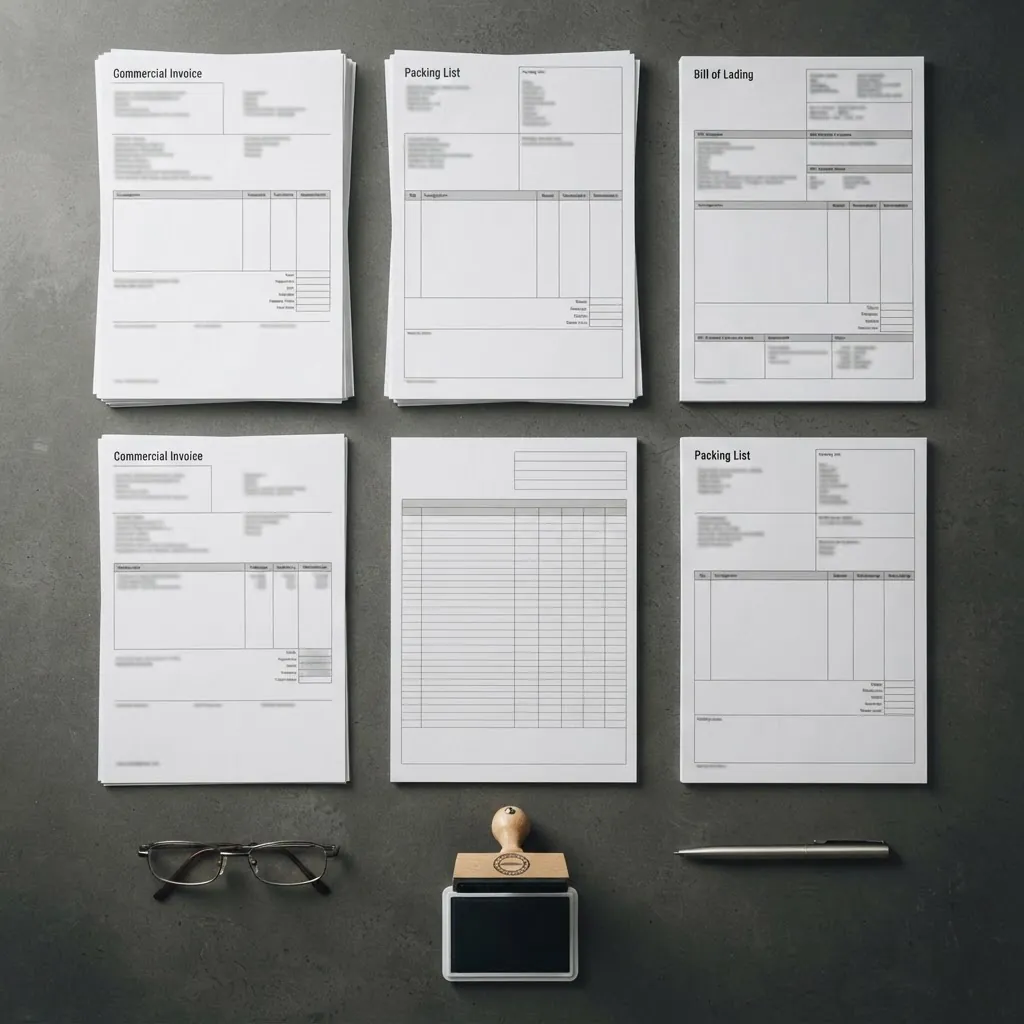
Commercial invoice and packing list, a copy of the bill of lading or waybill, the delivery document with notes, photos or video of the damage, the insurance policy, and a written claim letter stating the amount and its basis. Claims have time limits, so tell us as soon as you find a problem.
How is responsibility divided?
Our operational errors (such as booking mistakes, document errors or mishandling in our warehouse) are compensated directly under the agreement, without asking you to claim from the carrier first. Carrier liability is claimed and followed up by us on your behalf. Losses caused by the customer, such as false declarations, incomplete documents or poor packaging, are borne by the customer. Force majeure and government action are shared as set out in the agreement.
What don't you promise?
We don't promise arrival on an exact day, that goods will never be inspected, that containers will never be rolled in peak season, that any goods can be cleared, or a fixed number of clearance days. These are subject to carriers, customs or outside conditions. What we can do is complete documents, early booking, on-site support and prompt updates.
How do I complain if I'm not satisfied?
Call us or message us on WhatsApp directly. We will look into it and reply in writing.
Contact and working with us
How do I contact you?
Phone and WhatsApp share one number: +234 903 365 5298. You can also send your inquiry from the Contact page.
What are your working hours?
Monday to Sunday, 2:00 - 17:00 Lagos time (WAT).
What information should I give when asking for a quote?
Product name and use, total gross weight and total volume, origin and destination city, and the timing and budget you expect. Give the exact destination city: delivery to Lagos and to Abuja costs very differently. If you have an arrival deadline, say so directly.
Will the promised services be written into the contract?
Yes. What the all-in price covers, the limits of responsibility, compensation terms and time limits are all written into the service agreement. We make no verbal promises, and before signing you can ask for every point to be put on paper.
Connect Africa & ChinaDeliver Opportunities
Best Africa LogisticsShipping from China to Africa
Didn't find your question?
Not sure what to send? A product name and your destination city are enough to start. We send a quote within 30 minutes, the same day.
- WhatsApp / Phone (Nigeria)
- +86 000 0000 0000
- Business hours
- Mon to Sun, 2:00 - 17:00 Lagos time (WAT)
- Lagos warehouse 1
- No 2 Henry Carr Street, By Guinness Bus Stop, Ikeja, Lagos State 102212, Nigeria
- Lagos warehouse 2
- No. 5 Lateef Jakande Road, Agidingbi, Ikeja, Lagos State 101233, Nigeria
- Head office, China
- Ground Floor, Building 12, No.8 Tangwei Industrial Ave, Fuhai Subdistrict, Bao'an District, Shenzhen 518103, China